Wondering what your salary actually affords abroad? Run your own numbers in under a minute.
Open the calculatorSkip Berlin and Munich. Germany's cheaper cities have real jobs, real culture, and rents that are 30-50% lower. Here's the 2026 breakdown for Leipzig, Dresden, and Nuremberg — three places where a euro goes much further.
Our Berlin calculator and Munich calculatormake it easy to see what you'd save if you moved instead.
Costs side by side: all five cities
| Expense | Leipzig | Dresden | Nuremberg | Berlin | Munich |
|---|---|---|---|---|---|
| 1BR (center) | €520-850 | €450-700 | €850-1,100 | €900-1,100 | €1,200-1,600 |
| Transport pass | €84 | €80 | €85 | €86 | €89 |
| Meal out | €9-13 | €8-12 | €10-14 | €12-16 | €14-20 |
| Groceries | €200-280 | €190-260 | €220-300 | €250-350 | €280-380 |
Leipzig: the startup underdog
Leipzig went from a post-reunification ghost town to one of the more interesting cities in Europe. At €520-850/month for a 1BR, rent is roughly half of Berlin.
- Startup scene: the SpinLab accelerator, rising VC interest, and a steady flow of Berlin transplants chased out by rent.
- Plagwitz: Leipzig's creative quarter. Converted factories, galleries, canal-side cafes. Often called the new Kreuzberg, usually by people who miss old Kreuzberg.
- Porsche and BMW plants: stable, well-paid manufacturing jobs keep the economy grounded.
- Music: Bach and Wagner on one end, techno clubs on the other.
Dresden: the semiconductor boom
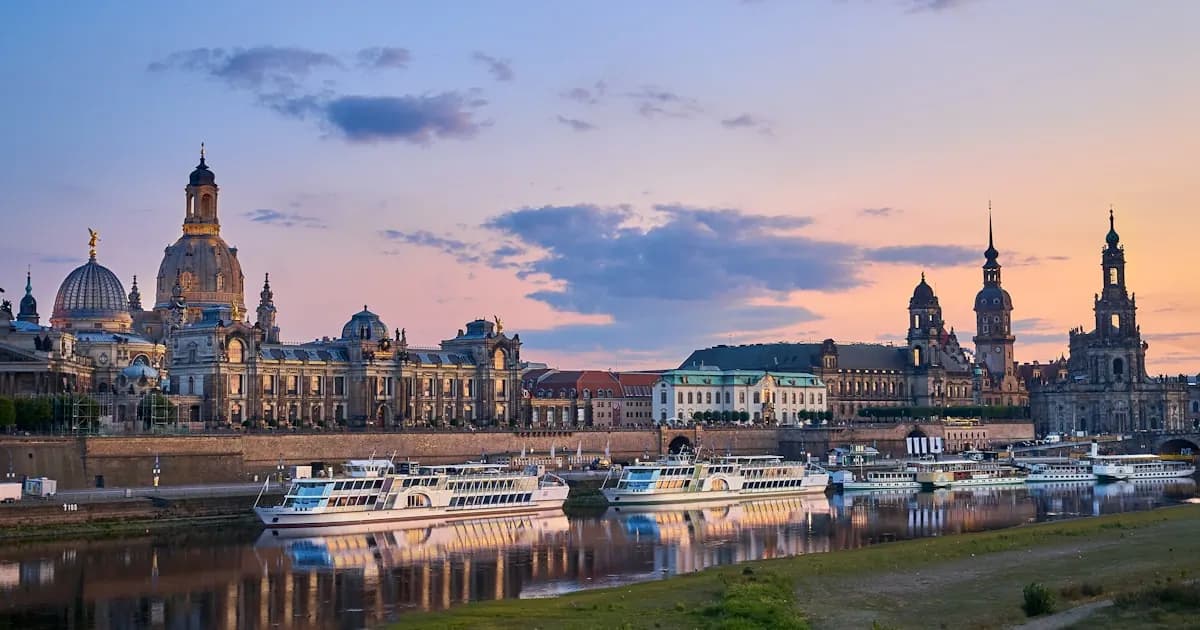
A semiconductor investment wave is reshaping Dresden's economy. Rent sits at €450-700/month for a 1BR, which makes it the cheapest big city in Germany right now.
- TSMC: the Taiwanese chipmaker's European fab is bringing thousands of high-tech jobs and billions of euros of investment.
- Silicon Saxony: Europe's largest semiconductor cluster, with Infineon, Bosch, and GlobalFoundries already present.
- Neustadt nightlife: Dresden's alternative district rivals Berlin for bar density and creative energy.
- Baroque beauty: The rebuilt Frauenkirche and Old Town make Dresden one of Germany's most beautiful cities.
Nuremberg: Bavaria without the Munich tax
Bavarian life without Munich rents. A 1BR runs €850-1,100/month, about 30% less than Munich.
- Manufacturing plus tech: Siemens, Continental, and Datev are all headquartered here. Strong demand for engineers and IT.
- Medieval core: the Imperial Castle, the Christmas market, the old town. Tourists love it, but it's a city people actually live in.
- Transport: ICE trains to Munich in an hour, Frankfurt in two. Easy to get out when you want to.
- Family-friendly: lower crime, good schools, lots of green space.
Which city fits which job
- Tech/startups: Leipzig (growing scene, remote-friendly) or Dresden (semiconductor boom)
- Manufacturing/engineering: Nuremberg (Siemens, automotive) or Leipzig (Porsche, BMW)
- Creative industries: Leipzig (art, music, media scene)
- Research/academia: Dresden (TU Dresden, Fraunhofer institutes) or Leipzig (University of Leipzig)
- Remote workers: Leipzig. Berlin salaries, Leipzig rent.
Which city is actually for you
Leipzig, if: you want the lowest rents, an alternative/creative feel, a growing startup scene, or you work remotely for a Berlin company.
Dresden, if:you're in semiconductors, engineering, or tech manufacturing. TSMC is pushing salaries up, and cost of living is still the lowest of any major city in Germany.
Nuremberg, if:you want Bavarian life at a fraction of Munich's cost, prefer a mid-sized city with strong transport, or you work in manufacturing and engineering.
Compare your budget across German cities
Enter your salary to see net pay, affordable neighbourhoods, and real savings potential in Berlin, Munich, and beyond.
Frequently Asked Questions
Topics covered
Run the numbers for yourself
Put in your salary and see what a month in Germany looks like after rent and tax.
Start calculating
